

Monday, February 22, 2021
On Feb. 16, the Paso Robles City Council unanimously approved starting the process to increase sewer rates for the next five years.
Following the state’s Proposition 218 requirements, the community will be notified of proposed sewer increases via mail and have an opportunity to voice their support or opposition at a public hearing slated for April 20.
The proposal includes increasing sewer rates by 24 percent on July 1, followed by an increase of 8 percent for each of the following four years.
If passed, the existing residential sewer rate structure will also transition from usage-based to a fixed component that will comprise approximately 42 percent of a typical resident’s total sewer bill by the end of the five-year period. Single-family charges are currently calculated based on winter water use from the prior year. This will help reduce annual fluctuations in wastewater bills due to changes in weather and other factors.
In 2011, the city adopted a major update to sewer rates, primarily to pay for a comprehensive upgrade of the wastewater treatment plant. Similar to what’s proposed, the rates increased gradually over a five-year period, from 2011 to 2016. At the time the update included changing the rate structure from a flat rate residential sewer bill to a variable sewer bill based on winter use. According to a staff report, the change allowed residents to “pay for what you use.”
Sewer rates, which are the system’s main source of revenue, haven’t changed since.
Plant operational expenses now exceed sewer rate revenue, in part because the Templeton Community Services District opted out of using Paso Robles sewage services in 2019. In the 2019-20 fiscal year, total revenue was $9.8 million while expenses were $13.3 million.
On top of revenue loss, the city is still paying for the treatment plant’s upgrades and repairs and it anticipates a cumulative cost of $50.5 million in future repairs and replacement projects.
During the Feb. 16 meeting, Councilmember Fred Strong said that after 60 years of not improving the sewer plant because “nobody wanted to pay more in sewer taxes, or sewer rates, we don’t have a choice.”
“I’m afraid that we are really proposing a solution that still keeps us even with the increases, still among the lowest in this entire region of California. I’m hoping that we pass this and move to go to the voters and let the chips fall where they may,” Strong said. ∆
Following the state’s Proposition 218 requirements, the community will be notified of proposed sewer increases via mail and have an opportunity to voice their support or opposition at a public hearing slated for April 20.
The proposal includes increasing sewer rates by 24 percent on July 1, followed by an increase of 8 percent for each of the following four years.
If passed, the existing residential sewer rate structure will also transition from usage-based to a fixed component that will comprise approximately 42 percent of a typical resident’s total sewer bill by the end of the five-year period. Single-family charges are currently calculated based on winter water use from the prior year. This will help reduce annual fluctuations in wastewater bills due to changes in weather and other factors.
In 2011, the city adopted a major update to sewer rates, primarily to pay for a comprehensive upgrade of the wastewater treatment plant. Similar to what’s proposed, the rates increased gradually over a five-year period, from 2011 to 2016. At the time the update included changing the rate structure from a flat rate residential sewer bill to a variable sewer bill based on winter use. According to a staff report, the change allowed residents to “pay for what you use.”
Sewer rates, which are the system’s main source of revenue, haven’t changed since.
Plant operational expenses now exceed sewer rate revenue, in part because the Templeton Community Services District opted out of using Paso Robles sewage services in 2019. In the 2019-20 fiscal year, total revenue was $9.8 million while expenses were $13.3 million.
On top of revenue loss, the city is still paying for the treatment plant’s upgrades and repairs and it anticipates a cumulative cost of $50.5 million in future repairs and replacement projects.
During the Feb. 16 meeting, Councilmember Fred Strong said that after 60 years of not improving the sewer plant because “nobody wanted to pay more in sewer taxes, or sewer rates, we don’t have a choice.”
“I’m afraid that we are really proposing a solution that still keeps us even with the increases, still among the lowest in this entire region of California. I’m hoping that we pass this and move to go to the voters and let the chips fall where they may,” Strong said. ∆
—Karen Garcia
Tuesday, February 9, 2021
Paso Robles residents could see an increase in sewer rates due in part to the Templeton Community Services District no longer needing the city’s wastewater treatment services.
At the Feb. 2 Paso Robles City Council meeting, the council directed staff to bring back rate proposal options to the Feb. 16 meeting that could help close the sewer fund’s current deficit.
Paso provides wastewater collection, treatment, and disposal for nearly every home, business, and institution within city limits. According to a staff report, the wastewater system includes 126 miles of sewers, 14 sewage lift stations, and a treatment plant with a 4.9 million gallon-a-day capacity.
Sewer rates, which are the system’s main source of revenue, haven’t been adjusted since 2016, when the city paid for a comprehensive upgrade to the wastewater treatment plant. Updating the wastewater plant enabled the city to comply with stringent requirements for disposal to the Salinas River and prepared the city for future recycled water.
In 2019, the Templeton Community Services District completed its own sewer plant, discontinuing its need for Paso’s treatment and disposal services. As a result, Paso’s sewer fund revenue decreased by approximately $70,000 per year.
A recently completed study analyzing the condition of the city’s sewer fund found that the fund had been depleted due to Templeton no longer needing services and no rate increase for four years. In the 2019-20 fiscal year, total revenue was $9.8 million and expenses were $13.3 million, resulting in a $3.4 million loss.
The study concludes that in order to pay for the sewer fund’s existing debt obligations, adequately fund the repair and replacement, and replenish fund reserves, sewer revenues initially need to increase by 24 percent. Then in each of the following years, sewer rates would need to increase by 8 percent.
At the Feb. 2 meeting, Councilmember Maria Garcia said that a fixed rate increase would be more helpful for people in managing their budgets in the long-term. However, she added that she understands this is a difficult time to present residents with a potential increase. ∆
At the Feb. 2 Paso Robles City Council meeting, the council directed staff to bring back rate proposal options to the Feb. 16 meeting that could help close the sewer fund’s current deficit.
Paso provides wastewater collection, treatment, and disposal for nearly every home, business, and institution within city limits. According to a staff report, the wastewater system includes 126 miles of sewers, 14 sewage lift stations, and a treatment plant with a 4.9 million gallon-a-day capacity.
Sewer rates, which are the system’s main source of revenue, haven’t been adjusted since 2016, when the city paid for a comprehensive upgrade to the wastewater treatment plant. Updating the wastewater plant enabled the city to comply with stringent requirements for disposal to the Salinas River and prepared the city for future recycled water.
In 2019, the Templeton Community Services District completed its own sewer plant, discontinuing its need for Paso’s treatment and disposal services. As a result, Paso’s sewer fund revenue decreased by approximately $70,000 per year.
A recently completed study analyzing the condition of the city’s sewer fund found that the fund had been depleted due to Templeton no longer needing services and no rate increase for four years. In the 2019-20 fiscal year, total revenue was $9.8 million and expenses were $13.3 million, resulting in a $3.4 million loss.
The study concludes that in order to pay for the sewer fund’s existing debt obligations, adequately fund the repair and replacement, and replenish fund reserves, sewer revenues initially need to increase by 24 percent. Then in each of the following years, sewer rates would need to increase by 8 percent.
At the Feb. 2 meeting, Councilmember Maria Garcia said that a fixed rate increase would be more helpful for people in managing their budgets in the long-term. However, she added that she understands this is a difficult time to present residents with a potential increase. ∆
—Karen Garcia
Monday, February 8, 2021
Despite Santa Barbara County’s recent attempts to assuage Los Alamos residents’ concerns about a proposed parcel split on an empty lot on Main Street, many are still concerned about the potential for traffic congestion.
At a community Zoom meeting on Jan. 28, 3rd District Supervisor Joan Hartmann and county staff addressed questions regarding an application for a tentative parcel map that would split a 1.53-acre lot at 774 Main St. in Los Alamos into four separate and smaller parcels. While no structural development is currently proposed for the project, Los Alamos community members worry the parcels will eventually be used for housing, and that proposed entrances and exits to those parcels could lead to future traffic congestion issues on Shaw Street.
 “This small part of Los Alamos should be no more or less appreciated for what it is than any other,” Los Alamos resident Seth Steiner said at the meeting, “and if Shaw becomes the access road, it will be severely impacted and made less safe and enjoyable for all.”
The portion of Shaw Street most likely to be impacted by any development on 774 Main St. is privately owned and, thus, not maintained by the county. A group of homeowners living on Shaw Street, including Steiner, pay dues to help fund the preservation and maintenance of the road. Steiner said Shaw Street is a narrow road that roughly 18 homeowners use to access their homes. It’s quiet and doesn’t get much vehicle traffic, he said, making it popular among walkers, bikers, and other pedestrians.
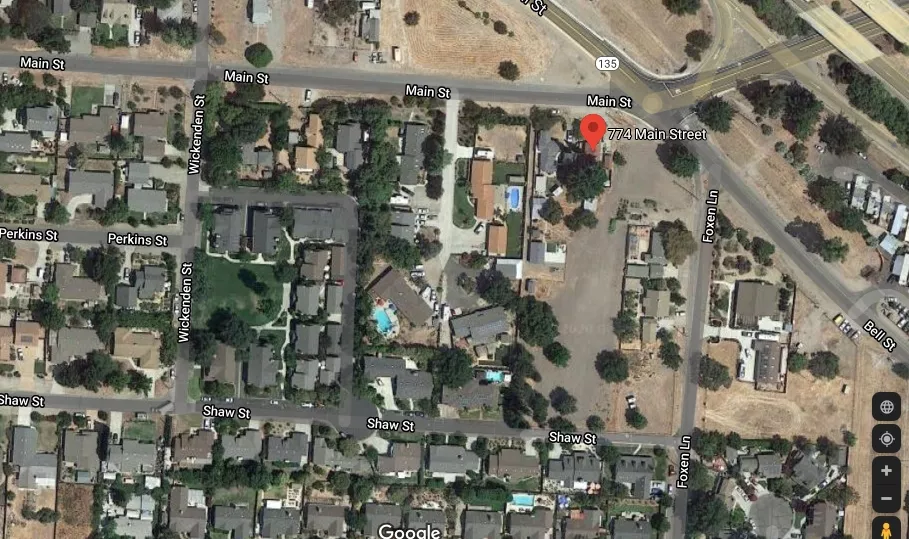
But as outlined in the project application, three of the four proposed parcels would be accessed from Shaw Street via a 24-foot shared driveway. If homes are built on those parcels—Steiner said he’s heard that as many as 11 could be built in total—that could lead to as many as 20 to 30 new vehicles in the neighborhood. While the proposal includes plans to widen a portion of Shaw, that wouldn’t include the last 100 feet of the road before it intersects with Foxen Lane, where Shaw bottlenecks into a single lane.
Although Los Alamos residents are calling for a traffic study in the area, the county typically only conducts traffic studies if a proposed project is estimated to generate 50 new peak hour travel trips. This project does not meet that threshold, and staff said at the meeting that a traffic study is unlikely.
Steiner said county staff need to pay closer attention to what locals are saying about this project. Staff aren’t on the ground. They aren’t familiar with the area like Shaw Street residents are. And Steiner said it’s not too early in the project for Los Alamos residents to get involved, as some county staff have insinuated.
“Not at all,” Steiner said. “I think if we remain silent about this or if we accept the way things are moving we’ll have less and less opportunity to shape the outcome. That attitude again is not accepting what the town feels about this.”
But county staff said they’re doing all they can to find compromises. In an attempt to reduce impacts to Shaw, planner Erick Gomez said a portion of one proposed parcel will go toward widening part of the private road. Parcel No. 4 will be accessed strictly from Main Street, and while entry to the remaining three parcels will be via Shaw Street, they’ll have exits on both Shaw and Main. Previously, all access and exits to parcels No. 1, 2, and 3 used Shaw Street.
Caltrans, Gomez said, will not allow entry to the parcels via Main Street because of its proximity to Highway 135.
“We did receive some concerns regarding access from Shaw Street,” Gomez said, “and so this is a way to maybe meet us halfway while also respecting that Caltrans has certain standards that we also need to make sure that we're meeting.”
At the meeting, Supervisor Hartmann also noted that Santa Barbara County will be required by the state to facilitate the creation of almost 30,000 new units of housing in the next eight years.
“And we all know we need workforce housing, we need farmworker housing, we need housing for lower income families, we want housing so that our children can stay here, Hartmann said at the meeting. “So that's kind of the big picture that we're all thinking about.” ∆
At a community Zoom meeting on Jan. 28, 3rd District Supervisor Joan Hartmann and county staff addressed questions regarding an application for a tentative parcel map that would split a 1.53-acre lot at 774 Main St. in Los Alamos into four separate and smaller parcels. While no structural development is currently proposed for the project, Los Alamos community members worry the parcels will eventually be used for housing, and that proposed entrances and exits to those parcels could lead to future traffic congestion issues on Shaw Street.
SCREENSHOT FROM GOOGLE MAPS
THE SITE Some Los Alamos community members are concerned that a proposed subdivision at 774 Main Street could lead to traffic issues on Shaw Street, a private and narrow road.
The portion of Shaw Street most likely to be impacted by any development on 774 Main St. is privately owned and, thus, not maintained by the county. A group of homeowners living on Shaw Street, including Steiner, pay dues to help fund the preservation and maintenance of the road. Steiner said Shaw Street is a narrow road that roughly 18 homeowners use to access their homes. It’s quiet and doesn’t get much vehicle traffic, he said, making it popular among walkers, bikers, and other pedestrians.
But as outlined in the project application, three of the four proposed parcels would be accessed from Shaw Street via a 24-foot shared driveway. If homes are built on those parcels—Steiner said he’s heard that as many as 11 could be built in total—that could lead to as many as 20 to 30 new vehicles in the neighborhood. While the proposal includes plans to widen a portion of Shaw, that wouldn’t include the last 100 feet of the road before it intersects with Foxen Lane, where Shaw bottlenecks into a single lane.
Although Los Alamos residents are calling for a traffic study in the area, the county typically only conducts traffic studies if a proposed project is estimated to generate 50 new peak hour travel trips. This project does not meet that threshold, and staff said at the meeting that a traffic study is unlikely.
Steiner said county staff need to pay closer attention to what locals are saying about this project. Staff aren’t on the ground. They aren’t familiar with the area like Shaw Street residents are. And Steiner said it’s not too early in the project for Los Alamos residents to get involved, as some county staff have insinuated.
“Not at all,” Steiner said. “I think if we remain silent about this or if we accept the way things are moving we’ll have less and less opportunity to shape the outcome. That attitude again is not accepting what the town feels about this.”
But county staff said they’re doing all they can to find compromises. In an attempt to reduce impacts to Shaw, planner Erick Gomez said a portion of one proposed parcel will go toward widening part of the private road. Parcel No. 4 will be accessed strictly from Main Street, and while entry to the remaining three parcels will be via Shaw Street, they’ll have exits on both Shaw and Main. Previously, all access and exits to parcels No. 1, 2, and 3 used Shaw Street.
Caltrans, Gomez said, will not allow entry to the parcels via Main Street because of its proximity to Highway 135.
“We did receive some concerns regarding access from Shaw Street,” Gomez said, “and so this is a way to maybe meet us halfway while also respecting that Caltrans has certain standards that we also need to make sure that we're meeting.”
At the meeting, Supervisor Hartmann also noted that Santa Barbara County will be required by the state to facilitate the creation of almost 30,000 new units of housing in the next eight years.
“And we all know we need workforce housing, we need farmworker housing, we need housing for lower income families, we want housing so that our children can stay here, Hartmann said at the meeting. “So that's kind of the big picture that we're all thinking about.” ∆
—Kasey Bubnash
Thursday, February 4, 2021
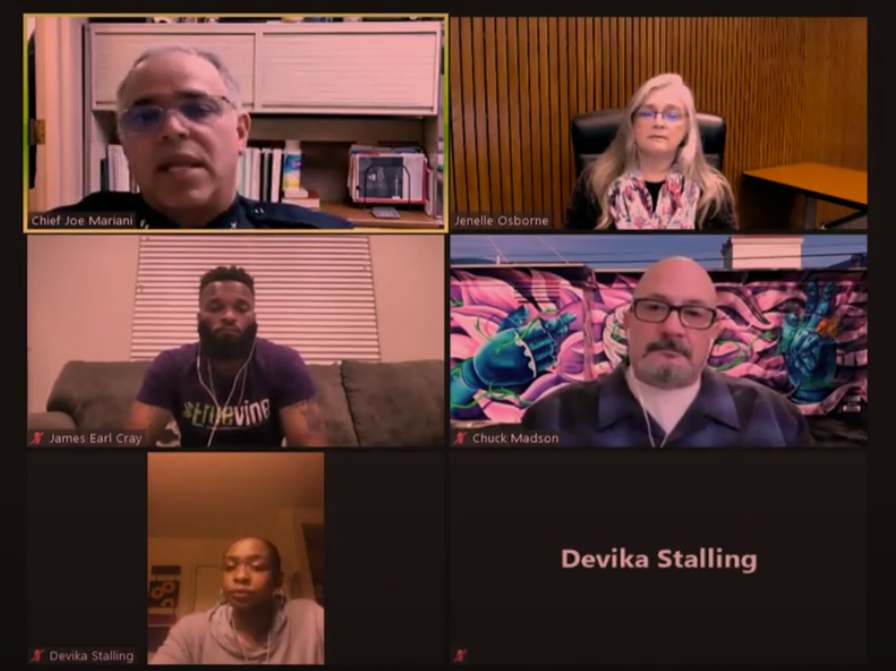
Following a week of increased violence in Lompoc, a group of gang intervention and prevention stakeholders came together for a virtual crime forum on Feb. 1 to answer questions from the community and give updates on their work.
 “This is an opportunity for our police chief and some of our community members to communicate what’s going on with relation to gang violence and activities for our youth and prevention,” Mayor Jenelle Osborne said at the forum. “While we have various issues going on surrounding crime in our community, it’s a really big subject, so we thought it best to focus on portions of violent crime in our community and have meaningful discussions around individual issues.”
The idea is to hold additional panel discussions down the road to address other aspects of crime in Lompoc, Osborne said.
Lompoc Police Chief Joseph Mariani said the police department is dealing with the challenges that come with limited resources.
“It’s common knowledge that we’re understaffed,” Mariani said. “I had some very difficult decisions to make. … We had to shut down our gang unit, our narcotics unit, because we had to take those personnel and put them in patrol.”
Mariani said the city saw “a horrendous week last week” in crime.
“We had four shootings in less than 48 hours,” he said. “We need to do better for our youth, and parents should be able to send their kid to the store to get food and not have the fear that in doing so they’re going to be attacked, assaulted, or shot.”
Also among the panelists was Chuck Madson, the co-founder of Future, a community organization with a mission to empower young people and a vision for a youth center—a goal that was nearly to fruition when the pandemic hit.
“What we saw was youth that were struggling connecting to options in our community, so our goal was to provide a location for youth, no matter what part of town you’re in, and have a one-stop resource for all those wonderful organizations in town that can provide support to our youth,” Madson said.
While COVID-19 brings certain barriers to in-person engagement, Madson continues to push the conversation around gang violence to one of prevention, rather than waiting for crimes to happen before taking action.
“What I encourage is our community to come together, even when unfortunate circumstances like this aren’t happening, and support all the amazing organizations here in town,” he said.
Devika Stalling, director of the Boys and Girls Club of Lompoc and vice president of Future, spoke about the community walks she used to organize prior to COVID-19.
“My sole purpose was to go into these gang-riddled neighborhoods where there was high gang activity and high drug activity and get those kids out of that environment,” Stalling said. “It worked. It also gave our police department and other people an opportunity to create a relationship where it wasn’t always on the bad end of things, but getting to know people.”
Madson said that gang violence in Lompoc is “just a symptom of a community struggling.”
“We have to come together as a community, all of us, and empower those organizations that are providing services to our kids and our youth,” Madson said. “But if you’re sitting there and you want to know what to do, or how you can help, please reach out. Shoot me an email and I’ll hook you up with somebody in town that could really use your support.” Δ
SCREENSHOT FROM CITY OF LOMPOC’S YOUTUBE PAGE
COMING TOGETHER Stakeholders in Lompoc gang prevention held a virtual forum on Feb. 1 to give updates on their work in the community.
The idea is to hold additional panel discussions down the road to address other aspects of crime in Lompoc, Osborne said.
Lompoc Police Chief Joseph Mariani said the police department is dealing with the challenges that come with limited resources.
“It’s common knowledge that we’re understaffed,” Mariani said. “I had some very difficult decisions to make. … We had to shut down our gang unit, our narcotics unit, because we had to take those personnel and put them in patrol.”
Mariani said the city saw “a horrendous week last week” in crime.
“We had four shootings in less than 48 hours,” he said. “We need to do better for our youth, and parents should be able to send their kid to the store to get food and not have the fear that in doing so they’re going to be attacked, assaulted, or shot.”
Also among the panelists was Chuck Madson, the co-founder of Future, a community organization with a mission to empower young people and a vision for a youth center—a goal that was nearly to fruition when the pandemic hit.
“What we saw was youth that were struggling connecting to options in our community, so our goal was to provide a location for youth, no matter what part of town you’re in, and have a one-stop resource for all those wonderful organizations in town that can provide support to our youth,” Madson said.
While COVID-19 brings certain barriers to in-person engagement, Madson continues to push the conversation around gang violence to one of prevention, rather than waiting for crimes to happen before taking action.
“What I encourage is our community to come together, even when unfortunate circumstances like this aren’t happening, and support all the amazing organizations here in town,” he said.
Devika Stalling, director of the Boys and Girls Club of Lompoc and vice president of Future, spoke about the community walks she used to organize prior to COVID-19.
“My sole purpose was to go into these gang-riddled neighborhoods where there was high gang activity and high drug activity and get those kids out of that environment,” Stalling said. “It worked. It also gave our police department and other people an opportunity to create a relationship where it wasn’t always on the bad end of things, but getting to know people.”
Madson said that gang violence in Lompoc is “just a symptom of a community struggling.”
“We have to come together as a community, all of us, and empower those organizations that are providing services to our kids and our youth,” Madson said. “But if you’re sitting there and you want to know what to do, or how you can help, please reach out. Shoot me an email and I’ll hook you up with somebody in town that could really use your support.” Δ
—Malea Martin
