

Monday, April 19, 2021
The U.S. Department of Health and Human Services (HHS) is still considering whether Camp Roberts Army National Guard base will be the eighth site to house unaccompanied migrant children in California after it sent a request to the facility in early April.
While it is expected to announce its decision soon, no date has been disclosed.
If Camp Roberts is found to be suitable to meet the needs of the children, the California Army National Guard post would temporarily house migrant minors as they are processed to be placed with family or a sponsor, prior to a court determination of their legality in the U.S.
Although the community is divided over its potential use as a temporary housing site, U.S. Rep. Salud Carbajal (D-Santa Barbara) has expressed his support for the idea.
Carbajal cited his recent visit to the Carrizo Springs Influx Care Facility in Texas—which also served as a holding facility for unaccompanied migrant minors—and reiterated his support for Camp Roberts to serve in that role in a recent joint press release with U.S. Rep. Jimmy Panetta (D-Carmel Valley).
“Camp Roberts is a safe and well-run site and, if selected, I will keep working with the Biden administration to provide appropriate resources to the facility and will closely monitor conditions to ensure children are cared for,” Carbajal said in the statement.
Panetta added: “As we continue to deal with the deluge of people, including unaccompanied children of all ages, coming to our southern border to try to avail themselves of our nation’s laws, we must take appropriate steps to ensure order and compassion as we apply out laws to determine their claims of asylum and attempts to legally reunify with their parents or family members.
“We have and will continue to be in contact with the Biden Administration and HHS for any further developments on their decision on Camp Roberts, and we will provide the necessary oversight for such temporary housing,” Penetta continued. “Moreover, we will continue our fight for an orderly, efficient, and safe process during the legal determination for those unaccompanied children who came here seeking their family and, ultimately, a better life.”
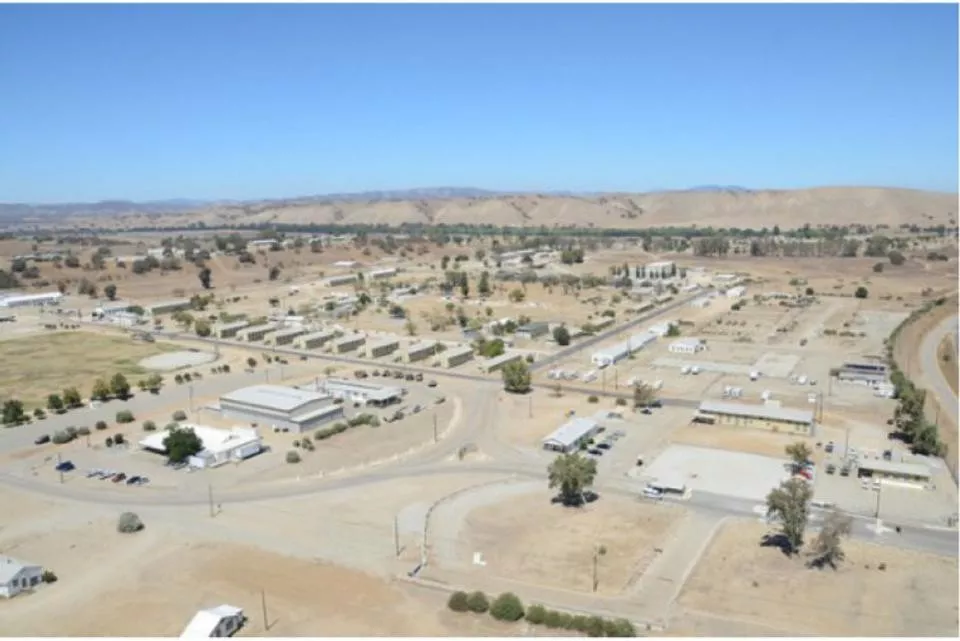
PHOTO COURTESY OF CAL GUARD MILITARY DEPARTMENT
TEMPORARILY HOUSED The U.S. Department of Health and Human Services is expected to announce a decision soon about whether Camp Roberts (pictured) will be one of eight sites in California to house unaccompanied migrant children.
While it is expected to announce its decision soon, no date has been disclosed.
If Camp Roberts is found to be suitable to meet the needs of the children, the California Army National Guard post would temporarily house migrant minors as they are processed to be placed with family or a sponsor, prior to a court determination of their legality in the U.S.
Although the community is divided over its potential use as a temporary housing site, U.S. Rep. Salud Carbajal (D-Santa Barbara) has expressed his support for the idea.
Carbajal cited his recent visit to the Carrizo Springs Influx Care Facility in Texas—which also served as a holding facility for unaccompanied migrant minors—and reiterated his support for Camp Roberts to serve in that role in a recent joint press release with U.S. Rep. Jimmy Panetta (D-Carmel Valley).
“Camp Roberts is a safe and well-run site and, if selected, I will keep working with the Biden administration to provide appropriate resources to the facility and will closely monitor conditions to ensure children are cared for,” Carbajal said in the statement.
Panetta added: “As we continue to deal with the deluge of people, including unaccompanied children of all ages, coming to our southern border to try to avail themselves of our nation’s laws, we must take appropriate steps to ensure order and compassion as we apply out laws to determine their claims of asylum and attempts to legally reunify with their parents or family members.
“We have and will continue to be in contact with the Biden Administration and HHS for any further developments on their decision on Camp Roberts, and we will provide the necessary oversight for such temporary housing,” Penetta continued. “Moreover, we will continue our fight for an orderly, efficient, and safe process during the legal determination for those unaccompanied children who came here seeking their family and, ultimately, a better life.”
—Karen Garcia
Tuesday, April 13, 2021
The San Luis Obispo County Sheriff’s Office arrested a Grover Beach man for the murder of Larry Bross, a 90-year-old Oceano resident who was killed in his home during January 2019, according to authorities.
 David James Krause, 41, faces a second-degree murder charge for the alleged killing. Krause was already in SLO County Jail on an unrelated charge when detectives arrested him on April 8.
Krause has two prior felonies on his record related to residential burglaries. He was a “very loose acquaintance” of Bross’s, according to SLO County Assistant District Attorney Eric Dobroth.
“I can’t go into detail,” Dobroth said at an April 8 news conference announcing the arrest and charge. “They had met, and they were, in my words, very loose acquaintances.”
SLO County Sheriff Ian Parkinson said that an “extensive investigation” into the homicide ultimately uncovered “forensic evidence which clearly identified the suspect as being responsible for the crime.” He said Krause quickly became a person of interest in the case. He did not comment on a potential motive.
“Essentially, it came down to a combination of witnesses and physical evidence,” Parkinson said, and added: “This was a single person. We have no evidence to suggest anybody else is involved in this.”
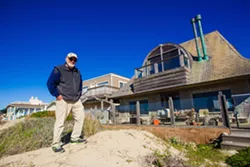
A community activist and retired history teacher, Bross lived on the 1400 block of Strand Way, which borders the Oceano Dunes. A concerned neighbor discovered his body in his home on Jan. 24, 2019. Investigators said Bross died of “multiple chop force traumatic injuries.” While no murder weapon was recovered, Dobroth described it as likely being a “hammer-like instrument.”
In January of this year, the Sheriff’s Office asked for the public’s help in locating a “friend or acquaintance” of Bross’s who was observed visiting him two days before his body was found.
The Bross murder was the first of six homocides to hit SLO County in 2019. Parkinson said that his office has now solved all six of those cases, which have led to arrests and pending charges. ∆

FILE PHOTO BY JAYSON MELLOM
SEEKING JUSTICE SLO County authorities are charging a Grover Beach man with the 2019 murder of Oceano activist Larry Bross (pictured).
Krause has two prior felonies on his record related to residential burglaries. He was a “very loose acquaintance” of Bross’s, according to SLO County Assistant District Attorney Eric Dobroth.
“I can’t go into detail,” Dobroth said at an April 8 news conference announcing the arrest and charge. “They had met, and they were, in my words, very loose acquaintances.”
SLO County Sheriff Ian Parkinson said that an “extensive investigation” into the homicide ultimately uncovered “forensic evidence which clearly identified the suspect as being responsible for the crime.” He said Krause quickly became a person of interest in the case. He did not comment on a potential motive.
“Essentially, it came down to a combination of witnesses and physical evidence,” Parkinson said, and added: “This was a single person. We have no evidence to suggest anybody else is involved in this.”
A community activist and retired history teacher, Bross lived on the 1400 block of Strand Way, which borders the Oceano Dunes. A concerned neighbor discovered his body in his home on Jan. 24, 2019. Investigators said Bross died of “multiple chop force traumatic injuries.” While no murder weapon was recovered, Dobroth described it as likely being a “hammer-like instrument.”
In January of this year, the Sheriff’s Office asked for the public’s help in locating a “friend or acquaintance” of Bross’s who was observed visiting him two days before his body was found.
The Bross murder was the first of six homocides to hit SLO County in 2019. Parkinson said that his office has now solved all six of those cases, which have led to arrests and pending charges. ∆
—Peter Johnson
Monday, April 12, 2021
Cambria Technology Collective, an information technology (IT) support and services nonprofit, expanded its free Wi-Fi project along Main Street in Cambria on April 4.
 The expansion provides internet access to electronic devices along the cross street of Tamson, near the Cookie Crock. It also covers the San Luis Obispo Regional Transit Authority Route 15 bus stop area, providing the service to those awaiting transportation services.
The next phase of the project includes building a network in the West Village area along Main Street between Mechanics Bank and the Shell gas station.
Jeremy Main, CEO of Cambria Technology Collective, told New Times via email that the nonprofit is slowly setting up access points in the community, however, the two areas that currently provide internet connection “have had hundreds of sign-in connections within the past month.”
The current design of the project is focused on providing coverage along Main Street between Windsor Boulevard to just past Bridge Street.
Anyone that needs connection can do so in the currently established areas, Main said, where the network name “Cambria Free WiFi” is visible on devices.
He said that local residents and individuals who live and work in the area part-time have expressed their gratitude for the free service.
“We know of several people who have stated that they can not afford their own internet or phone service, who have been able to communicate and stay connected with others during the time that COVID-19 restrictions have been in effect,” Main said.
The project came about after a conversation with former Cambria Community Services District Director Amanda Rice about Main’s experience as an IT network and systems administrator and previous large-scale Wi-Fi projects he had built.
Creating free access to Wi-Fi for Cambria visitors and residents is one of Main’s personal goals, among other projects that the nonprofit is designing.
“With Cambria having limited cell phone coverage, we see the ability to provide residents and guests here in Cambria with the ability to contact emergency services through Wi-Fi calling, in addition to the capability of the various local businesses and organizations to provide information about our amenities, services, and sights,” he said. ∆

IMAGE COURTESY OF THE CAMBRIA TECHNOLOGY COLLECTIVE
CONNECTION The Cambria Technology Collective expands on its free Wi-Fi program along Main Street in Cambria.
The next phase of the project includes building a network in the West Village area along Main Street between Mechanics Bank and the Shell gas station.
Jeremy Main, CEO of Cambria Technology Collective, told New Times via email that the nonprofit is slowly setting up access points in the community, however, the two areas that currently provide internet connection “have had hundreds of sign-in connections within the past month.”
The current design of the project is focused on providing coverage along Main Street between Windsor Boulevard to just past Bridge Street.
Anyone that needs connection can do so in the currently established areas, Main said, where the network name “Cambria Free WiFi” is visible on devices.
He said that local residents and individuals who live and work in the area part-time have expressed their gratitude for the free service.
“We know of several people who have stated that they can not afford their own internet or phone service, who have been able to communicate and stay connected with others during the time that COVID-19 restrictions have been in effect,” Main said.
The project came about after a conversation with former Cambria Community Services District Director Amanda Rice about Main’s experience as an IT network and systems administrator and previous large-scale Wi-Fi projects he had built.
Creating free access to Wi-Fi for Cambria visitors and residents is one of Main’s personal goals, among other projects that the nonprofit is designing.
“With Cambria having limited cell phone coverage, we see the ability to provide residents and guests here in Cambria with the ability to contact emergency services through Wi-Fi calling, in addition to the capability of the various local businesses and organizations to provide information about our amenities, services, and sights,” he said. ∆
—Karen Garcia
Wednesday, April 7, 2021
A recently opened “safe parking” area for local homeless residents at Railroad Square in San Luis Obispo has seen little to no participation since it launched three weeks ago, according to its operator, the Community Action Partnership of SLO County (CAPSLO).
 “Most nights it’s nothing,” said Grace McIntosh, deputy director of CAPSLO. “My hope is people will come and avail themselves. It’s about as low barrier and low key as you can get.”
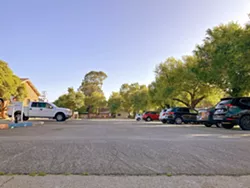
The 20-space lot next to the SLO Railroad Museum has been open since March 16 for the local houseless in SLO County to park and sleep overnight. A porta-potty, hand-washing station, and trash disposal are also available on-site.
McIntosh said that the nonprofit’s early outreach efforts indicate a lack of interest in the service. Other than being a SLO County resident, parkers are required to have a car with a registration that’s no more than six months expired. CAPSLO can assist drivers with car registration if needed, McIntosh said.
“The communication that our outreach workers are getting is that people don’t see any reason why they should leave where they’re currently parked,” she said. “This is still very, very early and we’re still trying to get the word out.”
CAPSLO has a one-year contract with SLO city, which owns the parking lot, to oversee the program launched in response to a growing homelessness crisis amid the pandemic.
Michael Codron, SLO’s community development director, said he’s not too concerned about the lack of early participation, believing that the demand will eventually increase.
“I think it’s consistent with other safe parking programs in terms of how they started relatively slow and built up a clientele that appreciates the service over time,” Codron said. “We intend to increase our outreach to people who are parking in areas of the city overnight.”
In addition to the sanitation services provided at the parking area, and CAPSLO’s optional social services offered at the 40 Prado Homeless Services Center, parkers will also avoid being cited for parking overnight against the municipal code, Codron said.
Yet, despite the pitch, some homeless residents have expressed objections to a heightened police presence near the parking lot and the surveillance cameras on-site.
“Some parkers will prefer to have the video surveillance for their safety, and I understand why some will not. That’s their choice,” Codron said. ∆
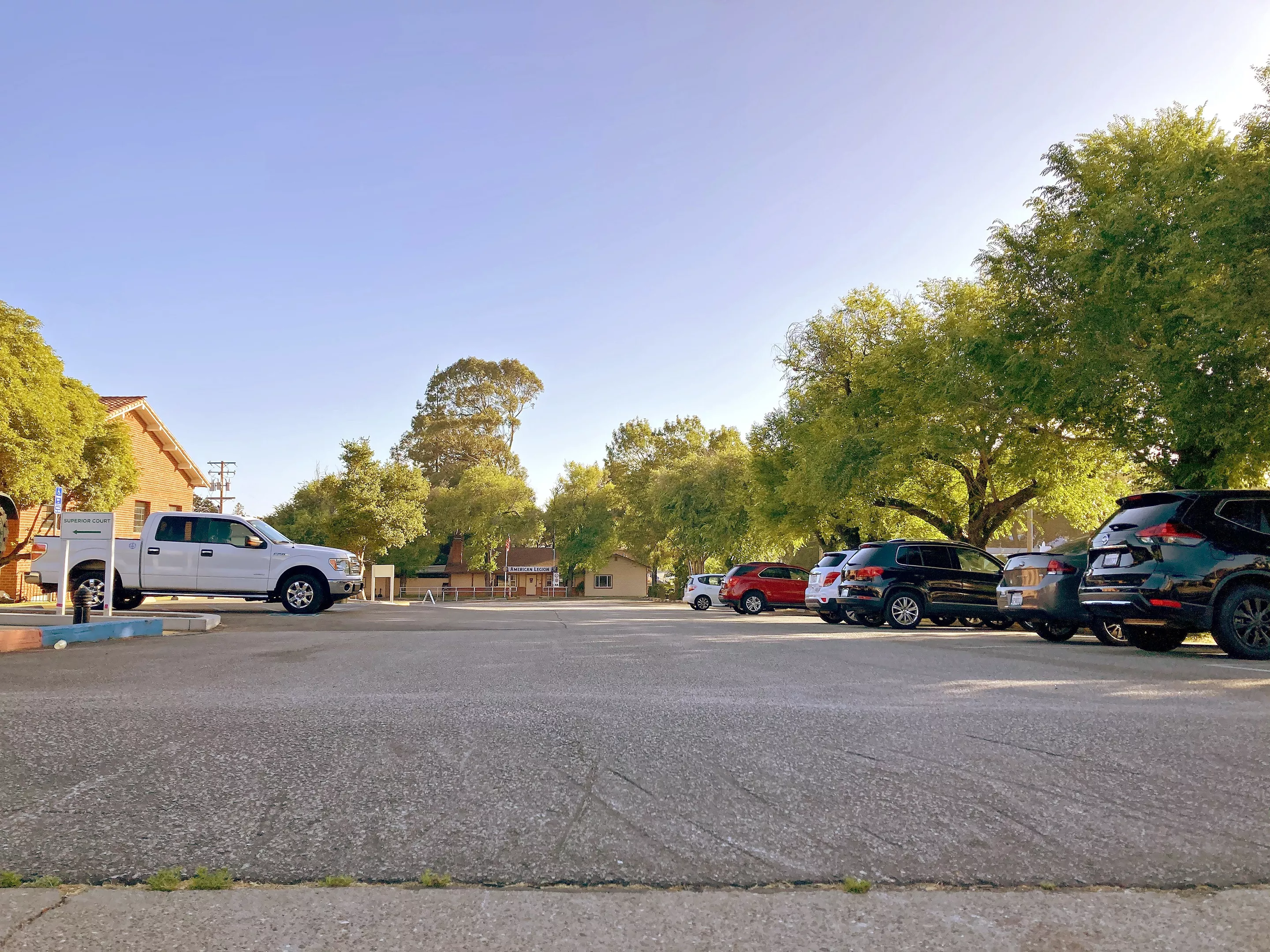
FILE PHOTO BY KASEY BUBNASH
WAITING FOR DEMAND Three weeks after opening, a new safe parking program for homeless residents in SLO—designed after success with a pilot program at the SLO Veteran's Hall (pictured)—is seeing little use.
The 20-space lot next to the SLO Railroad Museum has been open since March 16 for the local houseless in SLO County to park and sleep overnight. A porta-potty, hand-washing station, and trash disposal are also available on-site.
McIntosh said that the nonprofit’s early outreach efforts indicate a lack of interest in the service. Other than being a SLO County resident, parkers are required to have a car with a registration that’s no more than six months expired. CAPSLO can assist drivers with car registration if needed, McIntosh said.
“The communication that our outreach workers are getting is that people don’t see any reason why they should leave where they’re currently parked,” she said. “This is still very, very early and we’re still trying to get the word out.”
CAPSLO has a one-year contract with SLO city, which owns the parking lot, to oversee the program launched in response to a growing homelessness crisis amid the pandemic.
Michael Codron, SLO’s community development director, said he’s not too concerned about the lack of early participation, believing that the demand will eventually increase.
“I think it’s consistent with other safe parking programs in terms of how they started relatively slow and built up a clientele that appreciates the service over time,” Codron said. “We intend to increase our outreach to people who are parking in areas of the city overnight.”
In addition to the sanitation services provided at the parking area, and CAPSLO’s optional social services offered at the 40 Prado Homeless Services Center, parkers will also avoid being cited for parking overnight against the municipal code, Codron said.
Yet, despite the pitch, some homeless residents have expressed objections to a heightened police presence near the parking lot and the surveillance cameras on-site.
“Some parkers will prefer to have the video surveillance for their safety, and I understand why some will not. That’s their choice,” Codron said. ∆
—Peter Johnson
Thursday, April 1, 2021
U.S. Rep. Salud Carbajal (D-Santa Barbara) and California's senators are requesting transparency in the Department of Defense’s upcoming process for determining STARCOM’s Headquarters after the department’s U.S. Space Command decisions left them with questions.
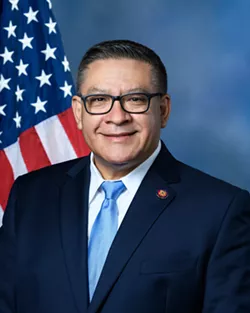 In 2019, Vandenberg Air Force Base was initially selected as a finalist for the U.S. Space Command Headquarters.
“The governors of Texas and Florida balked at that: Their areas were not included,” Carbajal said. “So there was a whole new process that ensued, and in 2020, there was a new list of finalists that were unveiled. Lo and behold, Vandenberg Air Force Base was removed from the list, and bases in Texas and Florida were added.”
Carbajal and Sen. Dianne Feinstein (D-California) sent requests to the department asking for transparency over the selection process, and now the Department of Defense Office of Inspector General is conducting a review of the decision.
The Space Force will soon embark on a selection process to pick a location for its new Space Training and Readiness Command (STARCOM). Carbajal, Feinstein, and Sen. Alex Padilla (D-California), want to ensure that the process is more transparent this time around.
The lawmakers penned a letter to Defense Secretary Lloyd Austin earlier this month requesting that the basing decision process for STARCOM be more clear, and urged the department to consider Vandenberg Air Force Base for the headquarters.
“We believe that Vandenberg AFB will be a top-tier candidate due to its existing training assets, including the 533d Training Squadron,” the letter said. “We look forward to learning more about the methodology that will be used in this basing decision and respectfully request that you give Vandenberg AFB all due consideration during the evaluation process.”
Carbajal said the search for STARCOM’s headquarters is expected to kick off in the near future, though he wasn’t aware of an exact timeline.
“We want to get ahead of the process by putting them on notice that Vandenberg is uniquely and exceptionally situated and qualified for the STAR Command that will be based in the United States,” Carbajal said.
One of those unique qualifications is that Vandenberg hosts the 533d Training Squadron, which already trains Air Force and Space Force personnel in space systems.
“We think Vandenberg Air Force Base is absolutely, perfectly equipped as probably the best candidate to be considered when they decide to move forward with this strategic process,” Carbajal said.
He added that if STARCOM headquarters were on the base, the local community would benefit from the new jobs and people it brings to the area. Δ
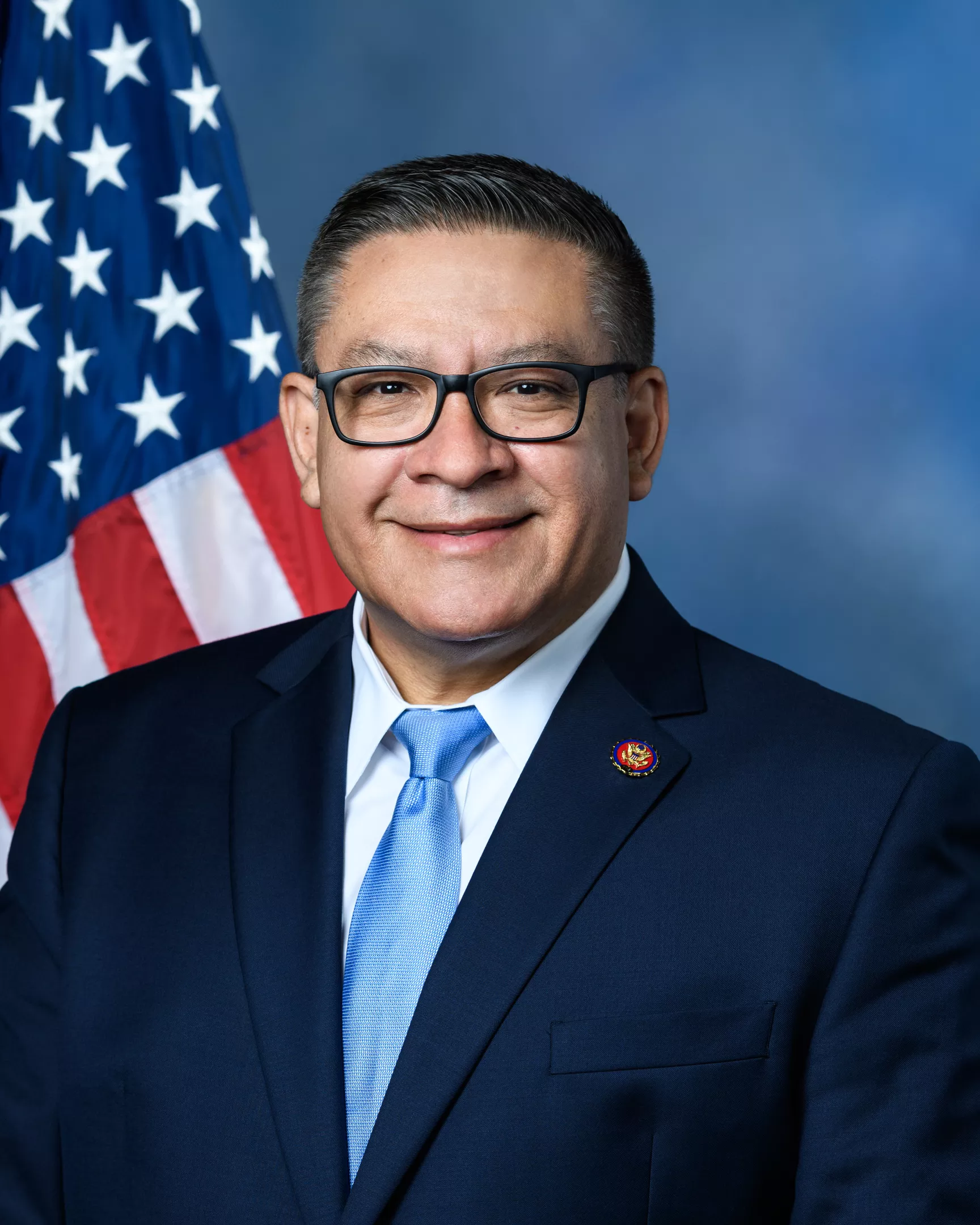
PHOTO COURTESY OF SALUD CARBAJAL’S OFFICE
BASING DECISIONS U.S. Rep. Salud Carbajal (D-Santa Barbara) is asking for transparency in the future STARCOM headquarter selection process after Vandenberg Air Force Base was removed as a finalist for unclear reasons.
“The governors of Texas and Florida balked at that: Their areas were not included,” Carbajal said. “So there was a whole new process that ensued, and in 2020, there was a new list of finalists that were unveiled. Lo and behold, Vandenberg Air Force Base was removed from the list, and bases in Texas and Florida were added.”
Carbajal and Sen. Dianne Feinstein (D-California) sent requests to the department asking for transparency over the selection process, and now the Department of Defense Office of Inspector General is conducting a review of the decision.
The Space Force will soon embark on a selection process to pick a location for its new Space Training and Readiness Command (STARCOM). Carbajal, Feinstein, and Sen. Alex Padilla (D-California), want to ensure that the process is more transparent this time around.
The lawmakers penned a letter to Defense Secretary Lloyd Austin earlier this month requesting that the basing decision process for STARCOM be more clear, and urged the department to consider Vandenberg Air Force Base for the headquarters.
“We believe that Vandenberg AFB will be a top-tier candidate due to its existing training assets, including the 533d Training Squadron,” the letter said. “We look forward to learning more about the methodology that will be used in this basing decision and respectfully request that you give Vandenberg AFB all due consideration during the evaluation process.”
Carbajal said the search for STARCOM’s headquarters is expected to kick off in the near future, though he wasn’t aware of an exact timeline.
“We want to get ahead of the process by putting them on notice that Vandenberg is uniquely and exceptionally situated and qualified for the STAR Command that will be based in the United States,” Carbajal said.
One of those unique qualifications is that Vandenberg hosts the 533d Training Squadron, which already trains Air Force and Space Force personnel in space systems.
“We think Vandenberg Air Force Base is absolutely, perfectly equipped as probably the best candidate to be considered when they decide to move forward with this strategic process,” Carbajal said.
He added that if STARCOM headquarters were on the base, the local community would benefit from the new jobs and people it brings to the area. Δ
—Malea Martin
Thursday, March 25, 2021
Santa Maria City Council voted to continue a proposed ordinance that will regulate mobile car washers, but some of those affected aren’t happy about it.
After the ordinance passed its first hearing 4-1 on March 16, car washers took to the Santa Maria streets in protest on March 23, City Public Information Manager Mark van de Kamp said in a statement issued later that day.
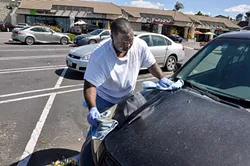 “The city wants to help mobile commercial car washes to prosper, with reasonable regulations for safety, fairness, and to protect the environment from uncontained wastewater discharged onto the street,” van de Kamp said. “The city is not trying to put anybody out of business. The goal is to have mobile commercial washers return to being mobile, not stationary on a street, which is what drives many of the complaints we receive.”
The ordinance was first brought before the council last summer, City Attorney Thomas Watson said at the March 16 council meeting, after the Regional Water Quality Control Board reached out to the city with concerns about the stormwater impacts of mobile car washes. The issue, Watson said, arose because some of the city’s mobile car wash operations have become effectively stationary, causing much larger quantities of wastewater to drain on public streets.
“But due to COVID and the impacts on the economy, as well as a request from council to do outreach to both the brick-and-mortar car washes as well as to the mobile car washes, there was some time lag to bringing [the ordinance] back,” Watson said.
The city’s code enforcement staff conducted outreach with about 40 mobile car wash operations, which Code Enforcement Supervisor Joy Castaing said is roughly half of those operating in the city. She added that the city has received a variety of complaints about mobile car washers that operate in one location. Residents are concerned about loud music, cones in the street, extension cords running across streets, trash, and parking issues.
“Most of these issues could be eliminated by simply not setting up in one location,” Castaing said.
Watson said that when the city team was conducting outreach, it found 31 mobile car washers set up on Boone Street on one given day.
“While again, with COVID, we’ve been understanding, it is becoming detrimental to the community,” Watson said.
The ordinance will require that mobile car washers maintain proper equipment setups to contain and dispose of water; that they no longer operate on public property, meaning they must go to their customers’ homes to conduct their services; and that the operations be inspected every two years.
All mobile washers will also have to obtain a permit, Castaing said.
Councilmember Gloria Soto supported the ordinance.
“I know that we are in the time of COVID and we need to do all that we can to support and protect small businesses, entrepreneurs, but when we’re talking about our storm drains being impacted and those pollutants going straight into creeks and oceans, that’s a concern of mine,” she said.
Councilmember Etta Waterfield voted in favor of the ordinance, but expressed some concerns about how it might impact the small business owners.
“I think what upsets me the most is you get one rotten peach that destroys the whole basket, and with the 30 that are stationary on Boone Street, and doing other things, is causing hardship for the ones that are doing it legally and that are being mobile,” Waterfield said.
The council ultimately motioned to continue the ordinance with the caveat that, if passed, it come back for review in six months to ensure that it is effective and not creating unforeseen hardships. Councilmember Michael Cordero was the only dissenting vote.
“Some people will go out of business,” Cordero said during discussion of the ordinance. “It’s going to be difficult and somewhat expensive for some of these people that are barely making it as it is.” Δ
Correction: A previous version of this article stated that the City Council passed the ordinance at its March 16 meeting. The council actually voted to continue the ordinance to a second reading on April 6, where it passed 3-2.
After the ordinance passed its first hearing 4-1 on March 16, car washers took to the Santa Maria streets in protest on March 23, City Public Information Manager Mark van de Kamp said in a statement issued later that day.
FILE PHOTO BY CAMILLIA LANHAM
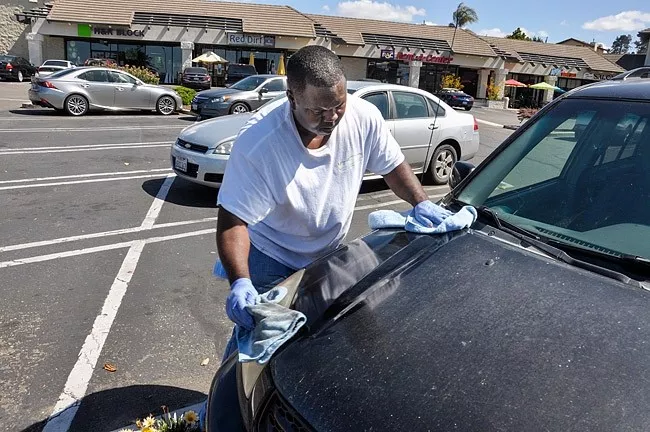
RETURN TO MOBILE A new ordinance passed by Santa Maria City Council aims to make mobile car washers truly mobile by banning washing on public property.
The ordinance was first brought before the council last summer, City Attorney Thomas Watson said at the March 16 council meeting, after the Regional Water Quality Control Board reached out to the city with concerns about the stormwater impacts of mobile car washes. The issue, Watson said, arose because some of the city’s mobile car wash operations have become effectively stationary, causing much larger quantities of wastewater to drain on public streets.
“But due to COVID and the impacts on the economy, as well as a request from council to do outreach to both the brick-and-mortar car washes as well as to the mobile car washes, there was some time lag to bringing [the ordinance] back,” Watson said.
The city’s code enforcement staff conducted outreach with about 40 mobile car wash operations, which Code Enforcement Supervisor Joy Castaing said is roughly half of those operating in the city. She added that the city has received a variety of complaints about mobile car washers that operate in one location. Residents are concerned about loud music, cones in the street, extension cords running across streets, trash, and parking issues.
“Most of these issues could be eliminated by simply not setting up in one location,” Castaing said.
Watson said that when the city team was conducting outreach, it found 31 mobile car washers set up on Boone Street on one given day.
“While again, with COVID, we’ve been understanding, it is becoming detrimental to the community,” Watson said.
The ordinance will require that mobile car washers maintain proper equipment setups to contain and dispose of water; that they no longer operate on public property, meaning they must go to their customers’ homes to conduct their services; and that the operations be inspected every two years.
All mobile washers will also have to obtain a permit, Castaing said.
Councilmember Gloria Soto supported the ordinance.
“I know that we are in the time of COVID and we need to do all that we can to support and protect small businesses, entrepreneurs, but when we’re talking about our storm drains being impacted and those pollutants going straight into creeks and oceans, that’s a concern of mine,” she said.
Councilmember Etta Waterfield voted in favor of the ordinance, but expressed some concerns about how it might impact the small business owners.
“I think what upsets me the most is you get one rotten peach that destroys the whole basket, and with the 30 that are stationary on Boone Street, and doing other things, is causing hardship for the ones that are doing it legally and that are being mobile,” Waterfield said.
The council ultimately motioned to continue the ordinance with the caveat that, if passed, it come back for review in six months to ensure that it is effective and not creating unforeseen hardships. Councilmember Michael Cordero was the only dissenting vote.
“Some people will go out of business,” Cordero said during discussion of the ordinance. “It’s going to be difficult and somewhat expensive for some of these people that are barely making it as it is.” Δ
Correction: A previous version of this article stated that the City Council passed the ordinance at its March 16 meeting. The council actually voted to continue the ordinance to a second reading on April 6, where it passed 3-2.
—Malea Martin
Thursday, March 18, 2021
A piece of legislation recently reintroduced by U.S. Rep. Salud Carbajal and a group of bipartisan House members aims to streamline the U.S. agricultural guest worker program and provide a path to legal status for farmworkers.
Called the Farm Workforce Modernization Act, Carbajal told the Sun that the bill will be on the House floor for a vote next week. The act, which passed in the House last Congress with bipartisan support, includes three main components: earned legalization, reforming the H-2A program, and creating an E-Verify system for all agricultural employment.
The last time the bill passed the House, 34 Republicans joined Democrats in voting for it.
“We’re hoping to get as many of those to continue to stay on next week,” Carbajal said.
The nine members who crafted the legislation include five Democrats and four Republicans.
The bill creates a whole new type of temporary status for farmworkers called Certified Agricultural Worker, Carbajal said. Applicants who show that they’ve worked 180 days of agricultural employment over the past two years and pass a background check can achieve the temporary status, which can be renewed.
If a farmworker with Certified Agricultural Worker status desires to do so, they can earn a path to a green card, Carbajal said.
“Workers with 10 years of agricultural work prior to the date of enactment must complete four additional years of such work,” a bill fact sheet states. “Workers with less than 10 years of agricultural work prior to the date of enactment must complete eight additional years of such work.”
Achieving this legal permanent residence then gives individuals the option to pursue citizenship, just like anyone else who holds a green card, Carbajal said.
The bill also proposes reforms to the H-2A guestworker program.
“In essence, we are creating a modern day guest worker program that would allow employers to address some of the challenges that they have with the existing H-2A program,” Carbajal said, such as recruitment, the filing process, reducing costs associated with the visa process, and reforming H-2A wages.
Finally, it creates a nationwide E-Verify system for all agricultural employment, which Carbajal said would be phased in after the legalization and H-2A reforms are implemented.
“Farmers will have a system by which they will vet people that are here,” Carbajal said. “That was part of the compromise that was reached.”
Carbajal said the bill serves as a shining example of compromise and collaboration in the House.
“This has been a great bipartisan effort, and I think provides a model for how we can work together on our continued immigration efforts that we are no doubt going to be working on,” he said.
The Farm Workforce Modernization Act hits close to home for Carbajal, whose father was a farmworker in the country’s original guest worker program in the ’50s and ’60s, he said.
“In the summers, after the farmworker program was over, he immigrated our family and I worked with my father many a summer in the fields,” Carbajal said. “So I have a unique perspective of having worked in the summer with my father who was a farmworker and knowing that kind of work, and now representing a district whose No. 1 industry is agriculture.” Δ
Called the Farm Workforce Modernization Act, Carbajal told the Sun that the bill will be on the House floor for a vote next week. The act, which passed in the House last Congress with bipartisan support, includes three main components: earned legalization, reforming the H-2A program, and creating an E-Verify system for all agricultural employment.
The last time the bill passed the House, 34 Republicans joined Democrats in voting for it.
“We’re hoping to get as many of those to continue to stay on next week,” Carbajal said.
The nine members who crafted the legislation include five Democrats and four Republicans.
The bill creates a whole new type of temporary status for farmworkers called Certified Agricultural Worker, Carbajal said. Applicants who show that they’ve worked 180 days of agricultural employment over the past two years and pass a background check can achieve the temporary status, which can be renewed.
If a farmworker with Certified Agricultural Worker status desires to do so, they can earn a path to a green card, Carbajal said.
“Workers with 10 years of agricultural work prior to the date of enactment must complete four additional years of such work,” a bill fact sheet states. “Workers with less than 10 years of agricultural work prior to the date of enactment must complete eight additional years of such work.”
Achieving this legal permanent residence then gives individuals the option to pursue citizenship, just like anyone else who holds a green card, Carbajal said.
The bill also proposes reforms to the H-2A guestworker program.
“In essence, we are creating a modern day guest worker program that would allow employers to address some of the challenges that they have with the existing H-2A program,” Carbajal said, such as recruitment, the filing process, reducing costs associated with the visa process, and reforming H-2A wages.
Finally, it creates a nationwide E-Verify system for all agricultural employment, which Carbajal said would be phased in after the legalization and H-2A reforms are implemented.
“Farmers will have a system by which they will vet people that are here,” Carbajal said. “That was part of the compromise that was reached.”
Carbajal said the bill serves as a shining example of compromise and collaboration in the House.
“This has been a great bipartisan effort, and I think provides a model for how we can work together on our continued immigration efforts that we are no doubt going to be working on,” he said.
The Farm Workforce Modernization Act hits close to home for Carbajal, whose father was a farmworker in the country’s original guest worker program in the ’50s and ’60s, he said.
“In the summers, after the farmworker program was over, he immigrated our family and I worked with my father many a summer in the fields,” Carbajal said. “So I have a unique perspective of having worked in the summer with my father who was a farmworker and knowing that kind of work, and now representing a district whose No. 1 industry is agriculture.” Δ
—Malea Martin
Monday, March 8, 2021
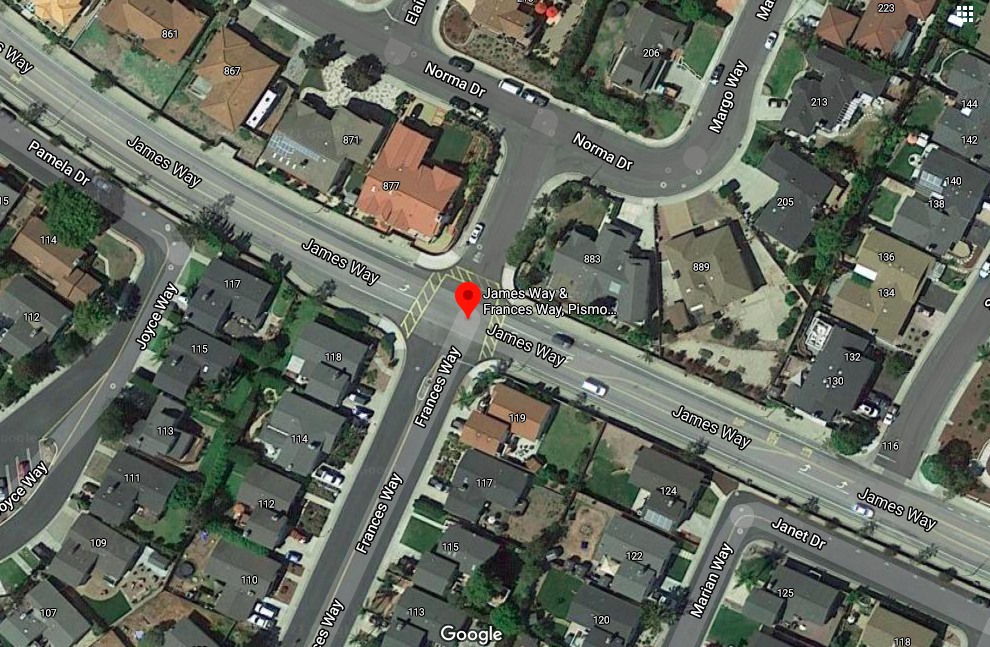
The city of Pismo Beach is putting a four-way stop at the intersection of James Way and Frances Way, where several residents say they’ve had close calls with cars while attempting to cross the 65-foot wide roadway.
 At a Traffic Safety Committee meeting on Feb. 11, several residents complained about the intersection, which they said is confusing and dangerous for both drivers and pedestrians. While there are already stop signs on Frances Way, there aren’t any stopping the flow of traffic on James, which is often host to dense and speedy traffic during busy travel times.
That makes it difficult to use the designated crosswalks leading across James Way, which Pismo Beach city staff say families and children often use to get to a nearby church and school.
Pismo Beach resident Summer Barnett wrote in an email to the City Council that her family uses the crosswalks at the intersection of James and Frances to get to a nearby pharmacy. It’s hard for drivers to see pedestrians when they first start crossing, and cars often don’t stop for her while she’s making her way over the road. Barnett said she doesn’t feel comfortable taking her daughter to cross that street during busy travel times.
“I’m sure some older children walk there without parents and need to cross,” she wrote, “and I am so concerned a tragedy will at some point occur at this intersection if a stop sign on James Way is not installed.”
A traffic study conducted at the intersection after the Feb. 11 Traffic Safety Committee meeting determined that the roadway is eligible for traffic calming stop signs. Pismo Beach City Council unanimously approved the installation of stop signs on James Way at a meeting on March 2.
“It is nice when government works and works efficiently,” City Manager Jim Lewis said at the meeting. “So we’re pleased that we could work on that for that neighborhood.” ∆
SCREENSHOT FROM GOOGLE MAPS
STOP Stop signs are going in on James Way in Pismo Beach where the road intersects with Frances Way.
That makes it difficult to use the designated crosswalks leading across James Way, which Pismo Beach city staff say families and children often use to get to a nearby church and school.
Pismo Beach resident Summer Barnett wrote in an email to the City Council that her family uses the crosswalks at the intersection of James and Frances to get to a nearby pharmacy. It’s hard for drivers to see pedestrians when they first start crossing, and cars often don’t stop for her while she’s making her way over the road. Barnett said she doesn’t feel comfortable taking her daughter to cross that street during busy travel times.
“I’m sure some older children walk there without parents and need to cross,” she wrote, “and I am so concerned a tragedy will at some point occur at this intersection if a stop sign on James Way is not installed.”
A traffic study conducted at the intersection after the Feb. 11 Traffic Safety Committee meeting determined that the roadway is eligible for traffic calming stop signs. Pismo Beach City Council unanimously approved the installation of stop signs on James Way at a meeting on March 2.
“It is nice when government works and works efficiently,” City Manager Jim Lewis said at the meeting. “So we’re pleased that we could work on that for that neighborhood.” ∆
—Kasey Bubnash
Thursday, March 4, 2021
After a rainy morning, the clouds over Beattie Park in Lompoc begin to part around noon and the sun peeks out. Kids shriek and giggle as they leap from play structure to structure, fly down slides, and swing across monkey bars still wet from a morning drizzle.
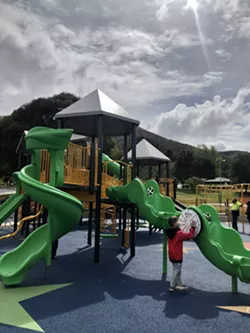
The brand new playground was unveiled on March 3 by city officials, and these children are the first to play on its state-of-the-art equipment.
 Ground broke on the project in August 2020, thanks to a combination of Proposition 68 per capita grant funding and Lompoc Community Development Block Grant (CDBG) funds. It’s now the largest inclusive playground in Santa Barbara County.
“It feels great,” Lompoc Recreation Manager Mario Guerrero Jr. said at the playground’s ribbon cutting. “It's something for the community, for all ages and ability levels.”
Lompoc Mayor Jenelle Osborne said that the playground’s designed to accommodate people with a range of abilities and mobility. It also means that people can come from anywhere to enjoy the park.
“We welcome not only those who live here to enjoy it, but those in our surrounding communities to come visit us,” Osborne said. “The other really amazing thing is that this park design has been nominated as a Triple National Demo Site, because it meets inclusive design, youth play, and adult fitness.”
A Triple National Demonstration Site designation is reserved for parks that meet stringent design standards in these three categories, making it accessible for not just kids of all ability levels, but adults, too.
The new playground replaces a much smaller structure that had to come down more than two years ago, Osborne said.
“We weren’t sure when we’d ever have the kind of funds to set something back up,” Osborne said. “This is 100 percent grant-funded, and it didn’t burden the city in any way, and we got to deliver way more than the little playground system that was here.”
City Manager Jim Throop said that the Proposition 68 grant funding the city received for the project was a big win.
“It’s a competitive funding source,” Throop said. “This was our first go-around competing with that.”
Lompoc’s success in securing and implementing the funding for the playground project will open up doors down the road, Throop said.
“We’re also putting in [funding applications] for many other projects around the city, now that we’ve been successful,” he said. “We think that we will have a very competitive edge against other cities to help bring up other parks that are in need of repair. … Stand by for more of these wonderful things to happen with Lompoc.” Δ
The brand new playground was unveiled on March 3 by city officials, and these children are the first to play on its state-of-the-art equipment.

PHOTO BY MALEA MARTIN
PLACE TO PLAY A young Lompoc resident tinkers with Beattie Park’s new inclusive playground shortly after its unveiling.
“It feels great,” Lompoc Recreation Manager Mario Guerrero Jr. said at the playground’s ribbon cutting. “It's something for the community, for all ages and ability levels.”
Lompoc Mayor Jenelle Osborne said that the playground’s designed to accommodate people with a range of abilities and mobility. It also means that people can come from anywhere to enjoy the park.
“We welcome not only those who live here to enjoy it, but those in our surrounding communities to come visit us,” Osborne said. “The other really amazing thing is that this park design has been nominated as a Triple National Demo Site, because it meets inclusive design, youth play, and adult fitness.”
A Triple National Demonstration Site designation is reserved for parks that meet stringent design standards in these three categories, making it accessible for not just kids of all ability levels, but adults, too.
The new playground replaces a much smaller structure that had to come down more than two years ago, Osborne said.
“We weren’t sure when we’d ever have the kind of funds to set something back up,” Osborne said. “This is 100 percent grant-funded, and it didn’t burden the city in any way, and we got to deliver way more than the little playground system that was here.”
City Manager Jim Throop said that the Proposition 68 grant funding the city received for the project was a big win.
“It’s a competitive funding source,” Throop said. “This was our first go-around competing with that.”
Lompoc’s success in securing and implementing the funding for the playground project will open up doors down the road, Throop said.
“We’re also putting in [funding applications] for many other projects around the city, now that we’ve been successful,” he said. “We think that we will have a very competitive edge against other cities to help bring up other parks that are in need of repair. … Stand by for more of these wonderful things to happen with Lompoc.” Δ
—Malea Martin
Monday, February 22, 2021
On Feb. 16, the Paso Robles City Council unanimously approved starting the process to increase sewer rates for the next five years.
Following the state’s Proposition 218 requirements, the community will be notified of proposed sewer increases via mail and have an opportunity to voice their support or opposition at a public hearing slated for April 20.
The proposal includes increasing sewer rates by 24 percent on July 1, followed by an increase of 8 percent for each of the following four years.
If passed, the existing residential sewer rate structure will also transition from usage-based to a fixed component that will comprise approximately 42 percent of a typical resident’s total sewer bill by the end of the five-year period. Single-family charges are currently calculated based on winter water use from the prior year. This will help reduce annual fluctuations in wastewater bills due to changes in weather and other factors.
In 2011, the city adopted a major update to sewer rates, primarily to pay for a comprehensive upgrade of the wastewater treatment plant. Similar to what’s proposed, the rates increased gradually over a five-year period, from 2011 to 2016. At the time the update included changing the rate structure from a flat rate residential sewer bill to a variable sewer bill based on winter use. According to a staff report, the change allowed residents to “pay for what you use.”
Sewer rates, which are the system’s main source of revenue, haven’t changed since.
Plant operational expenses now exceed sewer rate revenue, in part because the Templeton Community Services District opted out of using Paso Robles sewage services in 2019. In the 2019-20 fiscal year, total revenue was $9.8 million while expenses were $13.3 million.
On top of revenue loss, the city is still paying for the treatment plant’s upgrades and repairs and it anticipates a cumulative cost of $50.5 million in future repairs and replacement projects.
During the Feb. 16 meeting, Councilmember Fred Strong said that after 60 years of not improving the sewer plant because “nobody wanted to pay more in sewer taxes, or sewer rates, we don’t have a choice.”
“I’m afraid that we are really proposing a solution that still keeps us even with the increases, still among the lowest in this entire region of California. I’m hoping that we pass this and move to go to the voters and let the chips fall where they may,” Strong said. ∆
Following the state’s Proposition 218 requirements, the community will be notified of proposed sewer increases via mail and have an opportunity to voice their support or opposition at a public hearing slated for April 20.
The proposal includes increasing sewer rates by 24 percent on July 1, followed by an increase of 8 percent for each of the following four years.
If passed, the existing residential sewer rate structure will also transition from usage-based to a fixed component that will comprise approximately 42 percent of a typical resident’s total sewer bill by the end of the five-year period. Single-family charges are currently calculated based on winter water use from the prior year. This will help reduce annual fluctuations in wastewater bills due to changes in weather and other factors.
In 2011, the city adopted a major update to sewer rates, primarily to pay for a comprehensive upgrade of the wastewater treatment plant. Similar to what’s proposed, the rates increased gradually over a five-year period, from 2011 to 2016. At the time the update included changing the rate structure from a flat rate residential sewer bill to a variable sewer bill based on winter use. According to a staff report, the change allowed residents to “pay for what you use.”
Sewer rates, which are the system’s main source of revenue, haven’t changed since.
Plant operational expenses now exceed sewer rate revenue, in part because the Templeton Community Services District opted out of using Paso Robles sewage services in 2019. In the 2019-20 fiscal year, total revenue was $9.8 million while expenses were $13.3 million.
On top of revenue loss, the city is still paying for the treatment plant’s upgrades and repairs and it anticipates a cumulative cost of $50.5 million in future repairs and replacement projects.
During the Feb. 16 meeting, Councilmember Fred Strong said that after 60 years of not improving the sewer plant because “nobody wanted to pay more in sewer taxes, or sewer rates, we don’t have a choice.”
“I’m afraid that we are really proposing a solution that still keeps us even with the increases, still among the lowest in this entire region of California. I’m hoping that we pass this and move to go to the voters and let the chips fall where they may,” Strong said. ∆
—Karen Garcia
